01 / PROJECT FIT
Application & selection
Consider this arrangement for parts requiring horizontal suspension and sufficient clearance. Load and size limits are determined during project design.
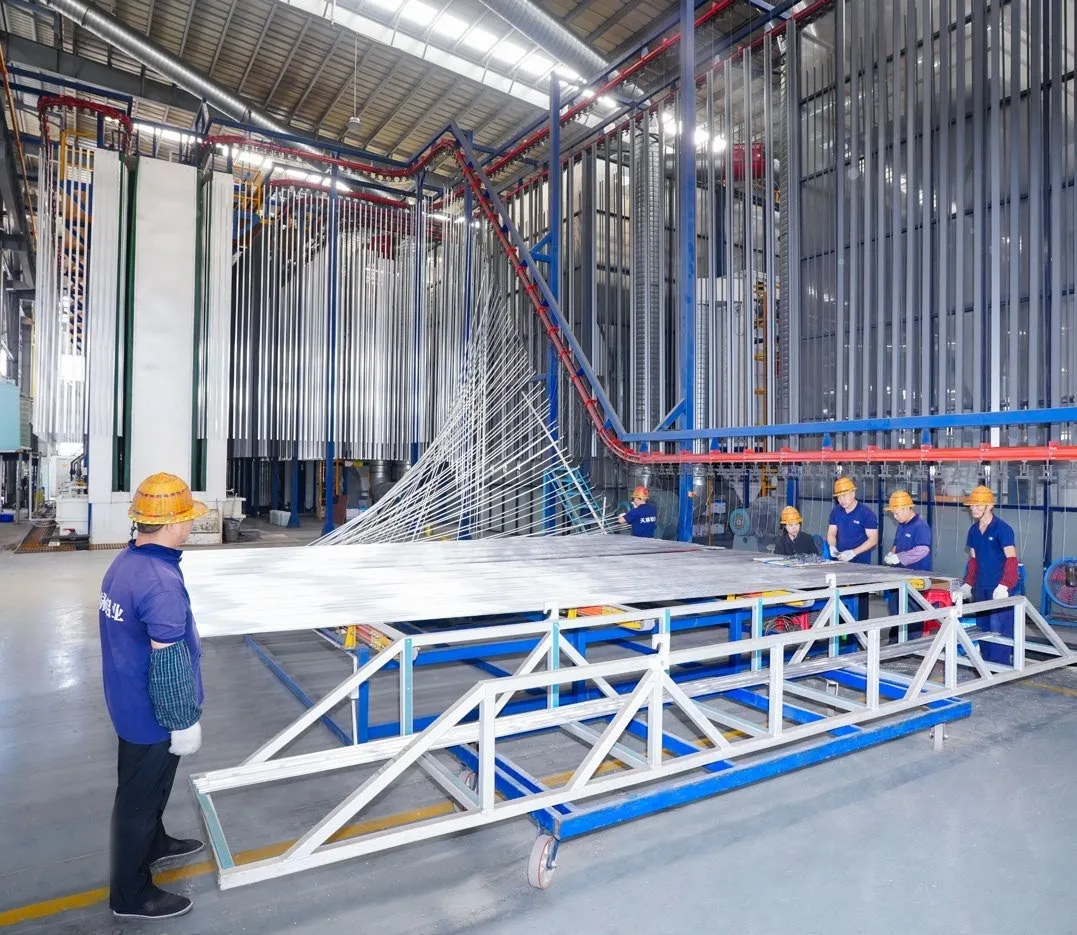
Plan a horizontal conveyor and coating space around part dimensions, hanging method and workshop conditions.
Request a quote →View site galleryConsider this arrangement for parts requiring horizontal suspension and sufficient clearance. Load and size limits are determined during project design.
An illustrative sequence includes immersion pretreatment, drying, powder application and recovery, curing, and loading and unloading. The final process is project-specific.
Process, equipment and service scope are confirmed for each project.
Share material, dimensions, weight, target output, workshop layout and colour-change needs.
Discuss your project →Process, equipment and service scope are confirmed for each project.
Horizontal lines suit small and medium parts produced in batches: hardware, enclosures and cabinets, short aluminium profiles, wire baskets and trays — provided single-piece weight and length stay within what the conveyor and hangers can carry. In this range, a horizontal line usually gives the best return for the investment.
The opposite is equally true. If parts exceed roughly three metres, if one face must be cosmetically perfect, or if clear height is limited, the calculation changes. Forcing a horizontal layout into those conditions produces problems in curve radius, hanger stability and oven height — and the cost of fixing them later is far higher than choosing correctly at the start.
Part size and hanger type, target output (pieces per hour or metres per minute), pretreatment route (spray, immersion or none), and curing energy (gas, electric or biomass). Fix these four and the line length, takt time and oven dimensions essentially follow.
We do not hand over an equipment list and then try to fit a layout around it. We establish these four variables first, then design a line that can actually run continuously.
Scope covers process design, layout, equipment manufacturing, site installation, commissioning and operator training. Pretreatment chemicals, powder, compressed air and the electrical supply are prepared by the customer; interface points are marked during the layout stage.
Acceptance is based on takt time, film-thickness consistency and adhesion under continuous running — measured against an agreed test standard, not on a single trial part.
How short can a horizontal line be?
It depends on the parts and the required takt. A small-batch configuration with a single booth can be quite compact, but the length can only be confirmed after laying out your actual part list.
Can we keep our existing pretreatment?
Usually yes. If the tanks are structurally sound and temperature control works, they are retained and connected to the new line, which saves a significant part of the investment. Leaking tanks or failed heating should be replaced.
What about frequent colour changes?
Configure according to change frequency. Low frequency: manual blow-down and quick powder hopper changes. High frequency: cyclone recovery plus automatic gun cleaning, which brings changeover down to an acceptable window.
How is lead time determined?
Lead time depends on configuration complexity and the production schedule at the time. It is stated in writing once the scope is confirmed; we do not give verbal commitments.