01 / PROJECT FIT
Application & selection
Window, door and architectural profiles vary in shape, batch size and colour requirements. Start with representative parts and production goals.
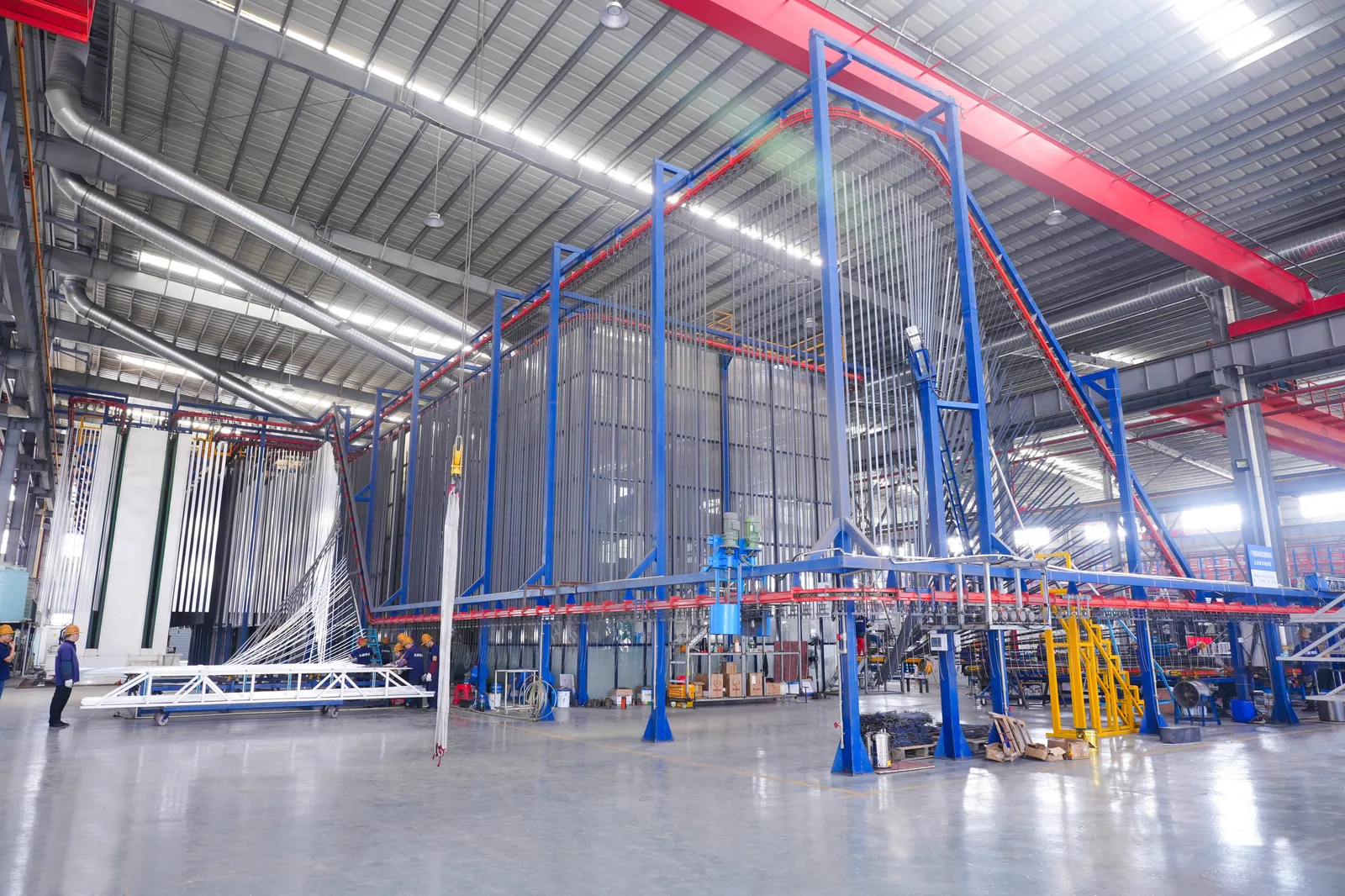
Discuss a complete line around profile length, production targets and workshop conditions.
Request a quote →View site galleryWindow, door and architectural profiles vary in shape, batch size and colour requirements. Start with representative parts and production goals.
Compare vertical and horizontal arrangements against part dimensions, clear height, fixtures, colour changes and output.
Process, equipment and service scope are confirmed for each project.
Send a profile section or photo, maximum length and weight, target output and workshop dimensions.
Discuss your project →Process, equipment and service scope are confirmed for each project.
First, length: profiles routinely start at six metres, which decides whether the line is vertical or multi-stage horizontal. Second, appearance: curtain-wall and window sections are highly sensitive to colour difference and film-thickness uniformity. Third, batch structure: usually few colours in large volumes, so colour changes are less frequent than in hardware coating — but first-pass success matters more.
These three points mean a profile line cannot simply reuse a general hardware line concept. Hangers, conveying and oven temperature uniformity all need to be designed for it.
A vertical line suits long parts and two-face appearance, with a small footprint but a clear-height requirement. A multi-stage horizontal line suits medium and short parts and mixed production. A vertical plus horizontal combination — long parts vertical, fittings horizontal — costs more but offers the most flexibility.
Which one to choose depends on the product mix, not on which is more advanced.
Film-thickness uniformity on profiles is largely decided by the hangers: contact position, contact resistance and hanger cleanliness all show up directly in thickness and transfer efficiency.
That is why hanger design and hanger maintenance instructions must be delivered together with the equipment on a profile line. Equipment alone is difficult to stabilise on site.
Do six-metre profiles require a vertical line?
Not necessarily. Multi-stage horizontal with transfer, or vertical, both work. The trade-off is clear height, footprint and output, and should be decided from measured building conditions.
How is colour difference controlled?
Through oven temperature uniformity, powder batch management and the curing curve working together. Guns alone cannot solve it, and this is the item most often neglected when retrofitting an old line.
Can profiles and hardware parts share one line?
Technically possible, but in practice either takt or film-thickness consistency is compromised. If both matter, evaluate a combined line rather than forcing one.