01 / PROJECT FIT
Application & selection
Compare maximum part dimensions, weight, available fixtures, hanging orientation and spacing.
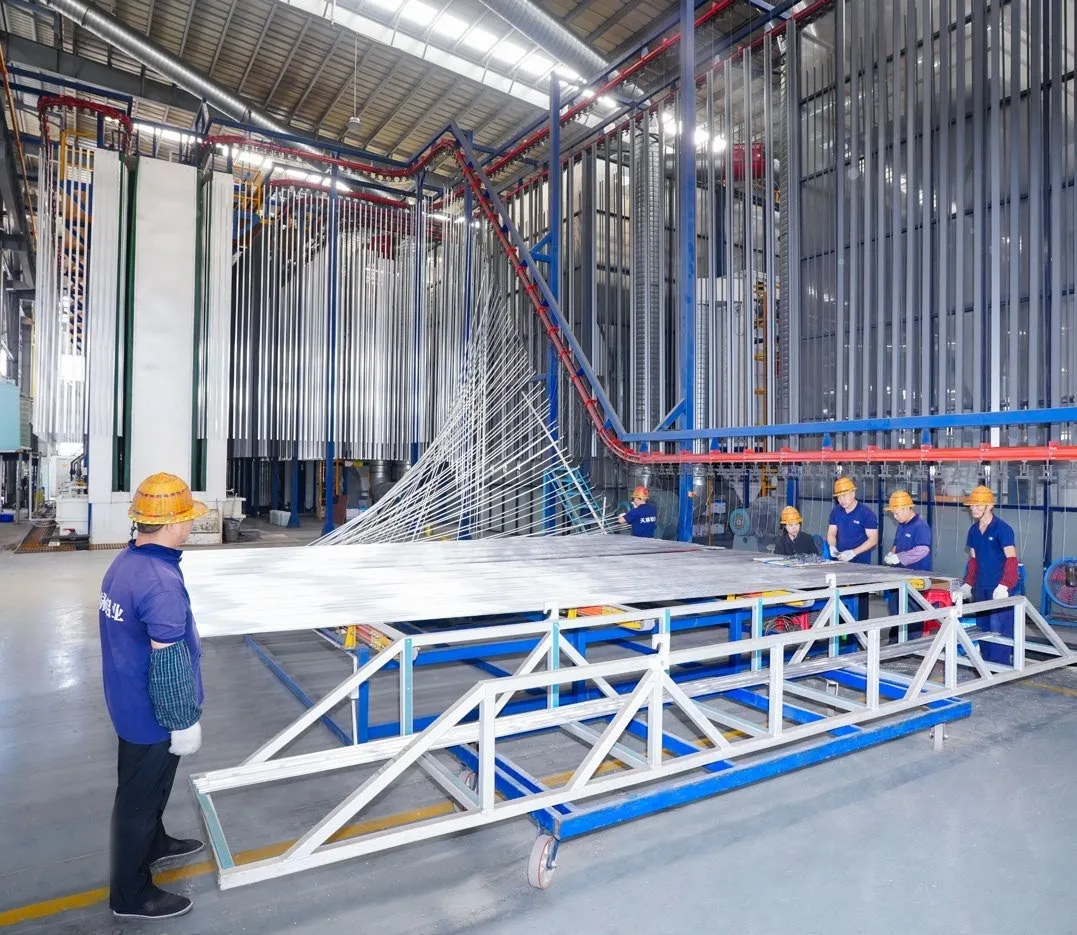
Start with the parts and the site when comparing line arrangements.
Request a quote →View site galleryCompare maximum part dimensions, weight, available fixtures, hanging orientation and spacing.
Check clear height, layout, target throughput, colour changes and pretreatment needs. The illustrated vertical line uses cascade pretreatment; the horizontal example uses immersion. Actual configurations are project-specific.
Process, equipment and service scope are confirmed for each project.
Even if details are incomplete, send part photos and workshop dimensions to start the discussion.
Discuss your project →Process, equipment and service scope are confirmed for each project.
On a horizontal line parts hang or lie horizontally: long footprint, low height requirement, suited to small and medium parts and mixed production. On a vertical line parts hang vertically: short footprint, high height requirement, suited to long parts and two-face appearance.
The difference is not about which is more advanced — it is about product structure. Choosing wrongly usually shows up as output that cannot be reached or appearance that fails inspection, not as equipment that refuses to run.
Parts under about 1.5 metres with a single cosmetic face are usually more economical on a horizontal line. Profiles over three metres that must be coated on both faces in one pass are more stable vertically. In between, decide by the proportion of main products, and consider a combined line where necessary.
One case is often overlooked: long parts in a building with insufficient clear height. The workable answer is multi-stage horizontal with transfer, or staged curing — not forcing the vertical height down.
For plants with a complex product mix, a combined line is a legitimate option: long parts vertical, fittings horizontal, sharing pretreatment and part of the curing capacity. Higher investment, best flexibility.
The precondition is sufficient pretreatment capacity. If two sections compete for one pretreatment stage, they slow each other down instead of complementing.
Is a vertical line always more energy-efficient?
No. Energy consumption depends on oven insulation, energy type and operating rate; there is no inherent advantage in the orientation itself.
Which suits a small factory?
Decide from the main product. A plant with a narrow product range needs only one correct choice; a plant with a wide range should evaluate a combined solution.
Can we build horizontal now and convert to vertical later?
Structurally that is close to a rebuild and not recommended. If building conditions allow, reserve height and foundations for the future configuration from the start.