01 / PROJECT FIT
Application & selection
For existing lines where capacity, recovery, conveying, controls or colour changes need review.
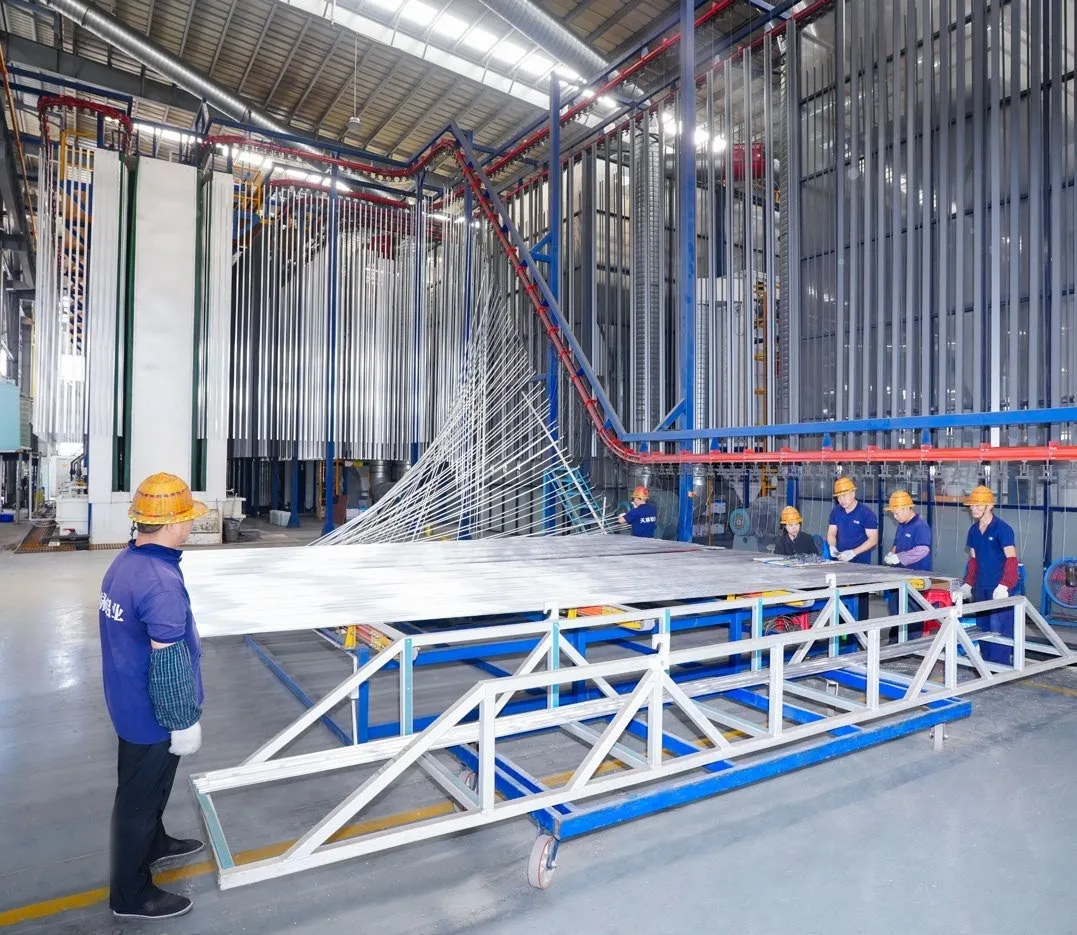
Discuss an upgrade around your existing equipment and production bottlenecks.
Request a quote →View site galleryFor existing lines where capacity, recovery, conveying, controls or colour changes need review.
We start with the existing equipment and interfaces, then discuss what can be retained, the scope of work and shutdown arrangements.
Process, equipment and service scope are confirmed for each project.
Share the existing layout, equipment photos, parts, current problem and project goals.
Discuss your project →Process, equipment and service scope are confirmed for each project.
Worth retrofitting: main steelwork and oven still sound, tanks not leaking, building conditions compatible with the new output, and the problems concentrated in recovery, colour change, takt or controls.
Not worth retrofitting: oven insulation largely failed, steelwork corroded to the point where load capacity is questionable, pretreatment tanks leaking, or output requirement already doubled. In these cases retrofitting cost climbs quickly towards a new build, and hidden problems remain afterwards.
One: poor recovery and low transfer efficiency. Two: colour change too slow to accept small batches. Three: pretreatment out of specification, causing batch adhesion failures. Four: high energy consumption and powder dropping from the chain. Each has a completely different retrofit path — they cannot share one template.
That is why a retrofit always starts with on-site diagnosis, not with a quotation. The diagnosis states which section to change, which to leave alone, and what level of performance the result should reach.
Most retrofits can be staged: complete the sections that can be built off-line first, then use a planned shutdown window to switch over. Downtime depends on whether the main conveyor and oven are touched.
Where structural work is unavoidable, we provide a shutdown window and a recovery plan, so that unavailable time is minimised rather than described as soon as possible.
How much cheaper is a retrofit than a new line?
There is normally a clear saving, but the extent depends on how many original components are retained and cannot be generalised. After diagnosis we can provide a retention list and a comparison.
Can the line be retrofitted again later?
Yes. The sensible approach is to reserve interfaces and space for future capacity now, so that two retrofit rounds do not conflict.
The existing line was built by another supplier — can you still work on it?
Yes. Retrofit does not depend on original drawings; it relies on site measurement and operating diagnosis, though the survey workload is larger than on our own equipment.
Is there a warranty on retrofit work?
Retrofitted sections carry a warranty as agreed. Retained original components are handed over as-is, and this is stated explicitly in the contract.